
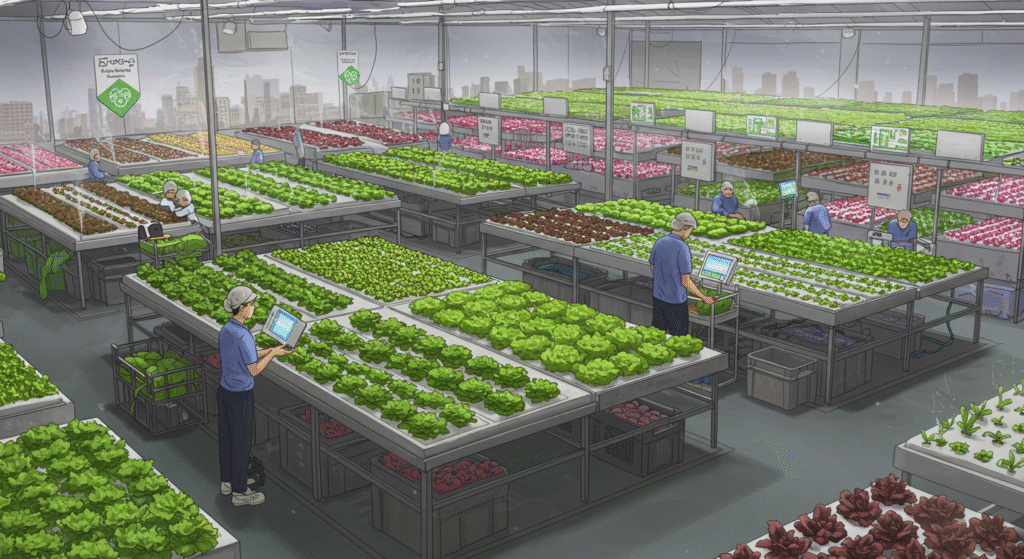
India, a nation deeply rooted in agriculture, is experiencing a quiet revolution. With burgeoning population, shrinking arable land, and unpredictable climatic conditions, traditional farming faces unprecedented challenges. Enter hydroponics – a soil-less farming technique that promises higher yields, efficient water usage, and consistent quality produce. For entrepreneurs and farmers looking to diversify and innovate, understanding the commercial hydroponics setup cost in India is the crucial first step towards a profitable venture. Greentech is at the forefront, guiding these investments towards a sustainable future.
Establishing a commercial hydroponic farm involves several significant investment areas. Breaking down these components helps in detailed financial planning and ensures no hidden costs surprise you down the line.
This is the core of your farm. The type of system chosen significantly impacts the overall cost.
Maintaining optimal temperature and humidity is vital for plant health and yield, especially in India’s diverse climate.
While often categorized under operational costs, initial training and specialized labor for setup can be a part of the upfront investment.
The total investment can fluctuate significantly based on several critical decisions:
While a precise commercial hydroponics setup cost in India can vary significantly, we can provide a general range to help in your initial planning. For a mid-sized commercial hydroponic farm (e.g., 5,000 sq ft to 1 acre greenhouse operation), the investment could range anywhere from ₹25 Lakhs to ₹1 Crore+. This range largely depends on the factors mentioned above. A smaller, simpler setup might start from ₹5-10 Lakhs, while a fully automated, multi-tier vertical farm could easily exceed ₹2-5 Crores. These figures are indicative and should be followed by a detailed project report for accurate assessment, a service Greentech excels in providing.
Understanding and maximizing your ROI (Return on Investment) is paramount for any commercial venture. In hydroponics, ROI is calculated by comparing the net profit generated from your produce against your total initial investment. Hydroponic farms often boast faster growth cycles, higher yields per square foot, and premium pricing for quality produce, leading to attractive profitability.
Factors influencing ROI include crop choice (high-value crops like exotic greens, herbs, or certain vegetables), market demand, efficient operational management, and reducing wastage. A well-planned hydroponic farm can typically achieve an ROI within 2-4 years, although this can vary based on scale and market conditions. Greentech provides detailed financial projections to help you visualize your potential ROI.
Greentech specializes in end-to-end hydroponic solutions, from consultation and design to setup and operational support. We help optimize the commercial hydroponics setup cost in India by offering tailored solutions that fit your budget and objectives. Our expertise ensures you invest in efficient, scalable, and profitable systems, avoiding common pitfalls and accelerating your journey towards a healthy ROI.
The Indian government, through various agricultural schemes like the National Horticulture Mission (NHM) and Mission for Integrated Development of Horticulture (MIDH), offers subsidies for protected cultivation and modern farming techniques. While direct hydroponics-specific subsidies are emerging, many components of a hydroponic setup (e.g., greenhouse construction, water management systems) can be eligible for existing agricultural subsidies. It’s advisable to check with state agricultural departments and local Krishi Vigyan Kendras (KVKs) for the latest schemes and eligibility criteria that can help reduce your commercial hydroponics setup cost in India.
The decision to delve into commercial hydroponics in India is an investment in the future of agriculture. While the initial commercial hydroponics setup cost in India might seem substantial, the long-term benefits – including higher yields, efficient resource utilization, and premium market access – make it a highly promising venture. With proper planning, technological integration, and expert guidance from partners like Greentech, your hydroponic farm can become a beacon of sustainable and profitable agriculture.
Hydroponics is highly space-efficient. You can start a small commercial operation in as little as 500-1000 sq ft, especially with vertical farming techniques. Larger operations typically range from 0.25 acres to several acres, depending on the desired production volume.
Yes, hydroponics can be highly profitable in India, particularly when focusing on high-value crops like exotic greens (lettuce, kale), culinary herbs, bell peppers, strawberries, or cherry tomatoes, which fetch premium prices. Efficient management and a strong market strategy are key to ensuring a healthy ROI.
Leafy greens (various types of lettuce, spinach, kale, basil), herbs (mint, oregano, thyme), vine crops (tomatoes, cucumbers, bell peppers), and some fruits like strawberries are excellent choices due to their fast growth cycles and high market demand.
While specific subsidies solely for “hydroponics” are still evolving, many components of a hydroponic farm like greenhouse construction, drip irrigation, and cold storage are eligible under broader schemes like the National Horticulture Mission (NHM) and Mission for Integrated Development of Horticulture (MIDH). It’s crucial to check with your state agriculture department for current and applicable schemes.
The typical timeframe for achieving ROI in a well-managed commercial hydroponic farm in India ranges from 2 to 4 years. This duration can be influenced by the scale of the operation, crop selection, market pricing, and operational efficiency.
“Greentech made our hydroponics journey smooth and understandable. Their guidance on managing the commercial hydroponics setup cost in India was invaluable. We were initially overwhelmed by the investment, but their clear breakdown and support helped us make informed decisions. We’re seeing excellent yields and are well on track for a great ROI!”
– Priya Sharma
This article was meticulously crafted by the Greentech Research Team, a collective of agricultural experts, engineers, and market analysts dedicated to advancing sustainable farming practices in India. With years of hands-on experience in designing, implementing, and optimizing hydroponic solutions, the team aims to provide accurate, actionable insights for aspiring and established hydroponic entrepreneurs. Greentech is committed to fostering a greener, more productive agricultural landscape across the nation.